Same length through every hit — momentum is conserved.
Kinetic energy KE—
Same for e = 1; drops a step when e < 1.
Two blocks on a track
What is this?
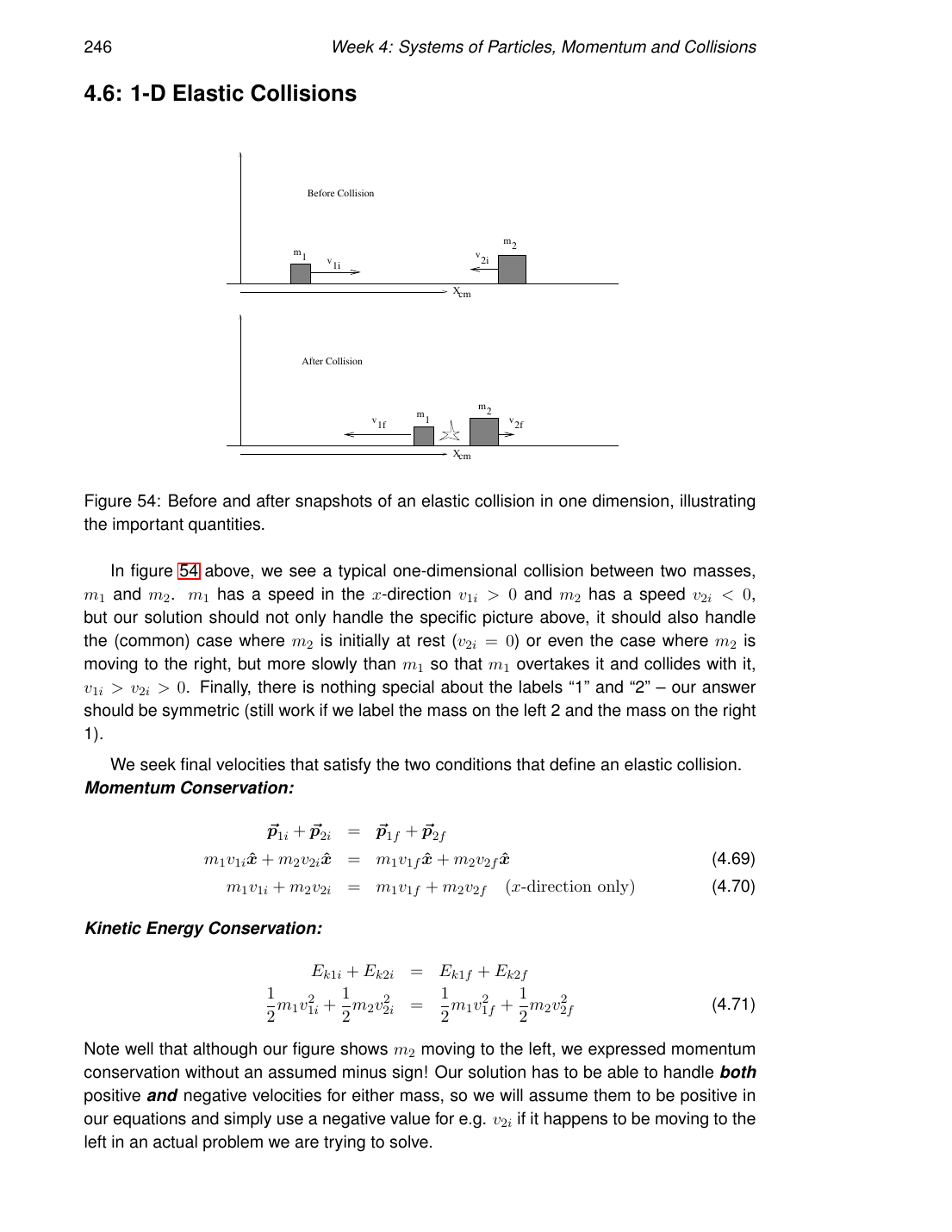
Two blocks slide toward each other on a track and crash — like two pool balls clicking together, or bumper cars. (The blue block is m1, the amber is m2; set their masses and speeds and watch.) The big idea: the total “oomph” (momentum) of the two together is the same before and after the crash. A crash can be bouncy (they rebound apart) or sticky (they clump together and move as one).
Words to know
Momentum — mass × speed; the “oomph” a moving object carries.
Conservation — a total that never changes (here, the combined momentum).
Elastic collision — a bouncy hit where the motion-energy is kept.
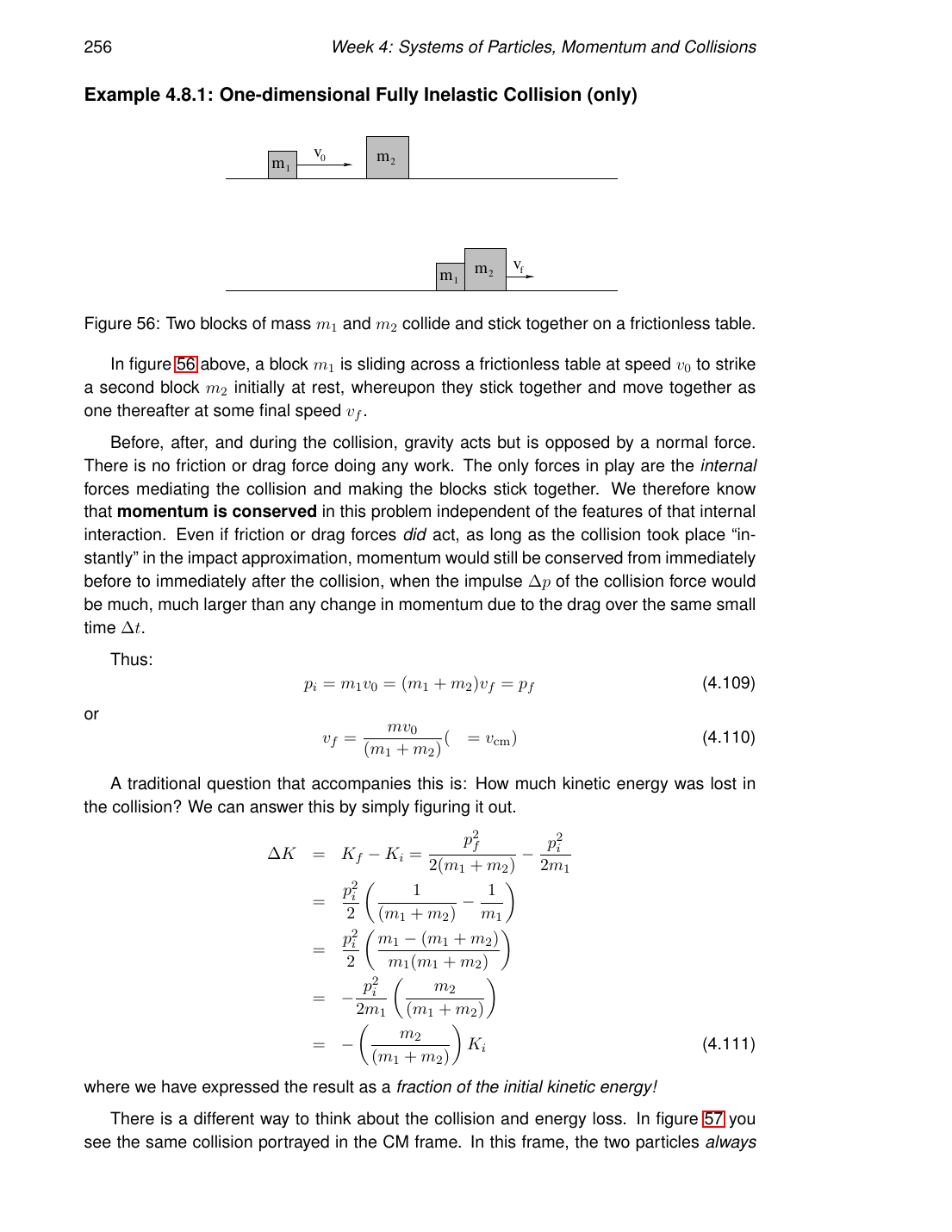
Inelastic collision — a sticky hit where some energy is lost to heat/dents.
Kinetic energy — the energy an object has because it's moving.
Real-world: car crashes with crumple zones and airbags (spreading the hit over more time), the break in pool/billiards, a Newton's cradle, a rocket that shoves itself forward by throwing exhaust backward, and a bat hitting a ball.
Ways to view this
Motion — just watch the blocks crash (the normal view).
Timeline — each block's position drawn over time, like a heart-rate monitor. You get two lines (one per block) that come together and kink apart at every collision.
live calculation — plugged in with the current blocks
▶ running…
Momentum (conserved)p.246
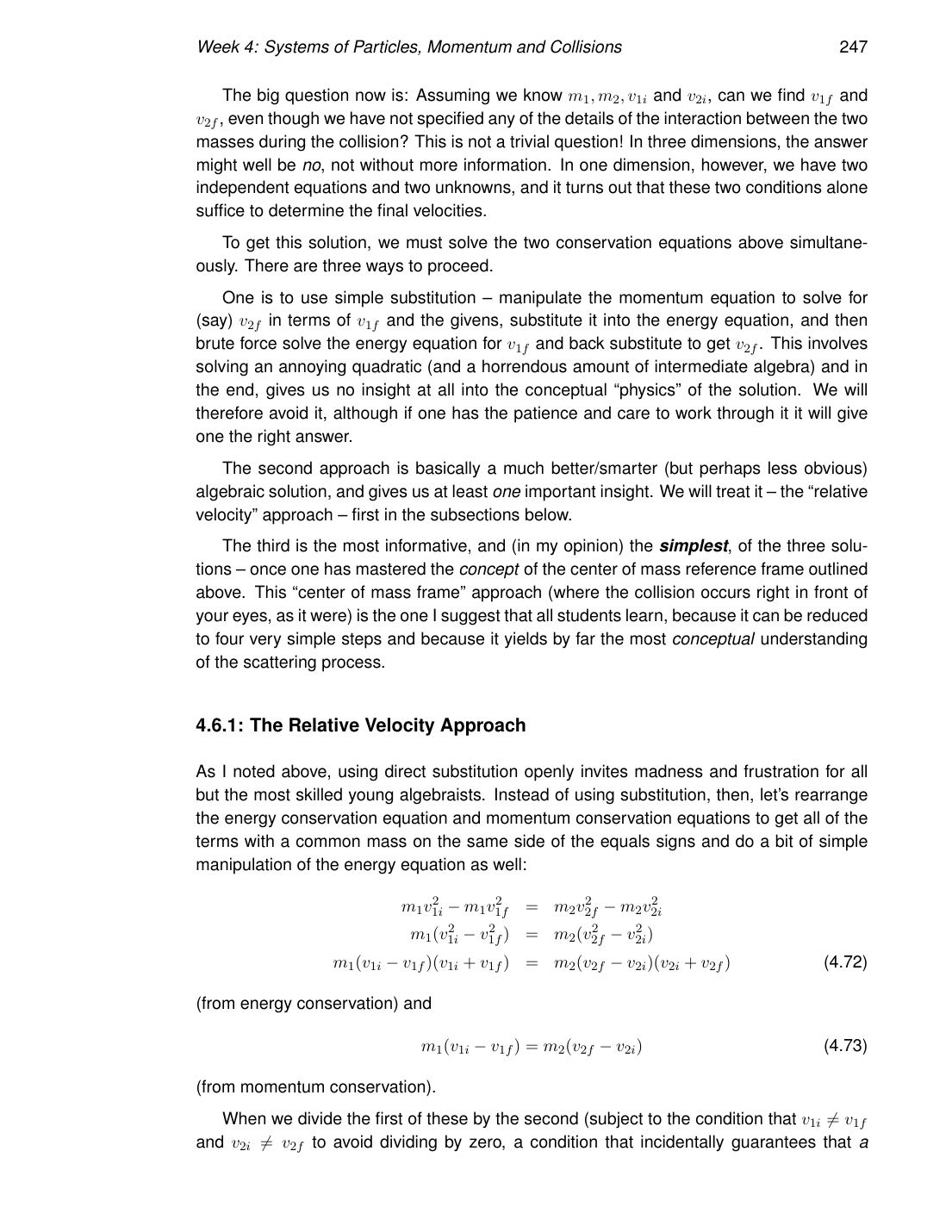
The total 'oomph' of the two blocks — it's exactly the same before and after any crash, because nothing outside is pushing.
Kinetic energyp.246
The total motion-energy — kept in a perfect bounce, but lost (to heat/dents) in a sticky, inelastic hit.
Elastic resultp.247
Block 1's speed right after a perfect bounce — with equal masses the two blocks simply swap speeds.
What if I change things?
Dial the restitution e from bouncy (e = 1) to sticky (e = 0). Two equal masses that bounce simply swap speeds, like billiard balls.
Show the math
The perfectly elastic result solves momentum + energy together:
v1f = ((m1−m2)v1 + 2m2·v2) / (m1+m2)
Set m1 = m2 and it collapses to v1f = v2, v2f = v1 — they trade velocities.
Why does it happen?
The two blocks push on each other equally and oppositely (Newton's third law), and there's no outside push along the track — so total momentum can't change. Energy only survives a perfectly bouncy hit.
Show the math
momentum kept: m1·v1 + m2·v2 conserved
fully inelastic: vf = (m1·v1 + m2·v2)/(m1+m2)
energy lost: ΔKE = ½·µ·(1−e²)·(Δv)², µ = m1m2/(m1+m2)
e = 1 loses nothing; e = 0 loses the most (they stick and leave at vcm).
Why does it matter?
Conservation of momentum is how we analyze car crashes, rocket propulsion, and particle physics — one law that holds for every collision, elastic or not.